Plastic Free July: What’s Around Your Product Matters
One simple way to take part in Plastic Free July is to be more mindful of the packaging of the products you use every day.
Every July, millions of people take part in Plastic Free July, a global movement that encourages small, everyday changes to reduce plastic waste (1). Your first reaction might be, "A campaign that challenges my everyday convenience? No thanks!" What if Plastic Free July isn't about perfection or giving up convenience altogether, but about making simple, realistic swaps that can have a lasting impact? In fact, Plastic Free July is inspired by behavioural science: research shows that small steps can lead to long-term behaviour change, proving that individual actions truly make a difference (1). By focusing on simple, everyday actions and reducing plastic use before it becomes waste, the movement helps build lasting habits and drive real change.
Now you might be thinking, “How should I start?”. One of the easiest places to begin is by looking at the products you use every day: household essentials, groceries, and skincare products. How are they packaged? Most likely, in plastic. There’s your answer: start by paying attention to the packaging of the products you use every day. Whenever possible, choose alternatives with less plastic or packaging made from more recyclable materials, such as glass or aluminium.
What’s Wrong With Plastic Packaging?
While plastic packaging is often convenient, plastic pollution and microplastics have created one of the most pressing environmental challenges of our time (2). It has been estimated that humanity has produced 9.2 billion tonnes of plastic since the 1950s (3). That’s roughly 900,000 Eiffel Towers. Read that again!
Unfortunately, the cosmetics industry is part of this ugly problem. Most products are made of plastic or packaged in plastic. In sum, plastic is a problem because it doesn't biodegrade: it breaks down into smaller pieces that persist in the environment for generations. This leads to polluted oceans, rivers, and soil, harms wildlife, and can even enter the food chain.
Packaging plays an important role in protecting products and making transportation safer and more efficient. But not all packaging has the same environmental impact.
Packaging is one of the most practical places where you can make an immediate difference. Choosing products in recyclable or reusable packaging is a simple action you can take to reduce plastic waste (2).
That's why being mindful of what we consume matters. By choosing products packaged in more recyclable materials such as glass or aluminium, we can help reduce our reliance on single-use plastics and support a more sustainable future.
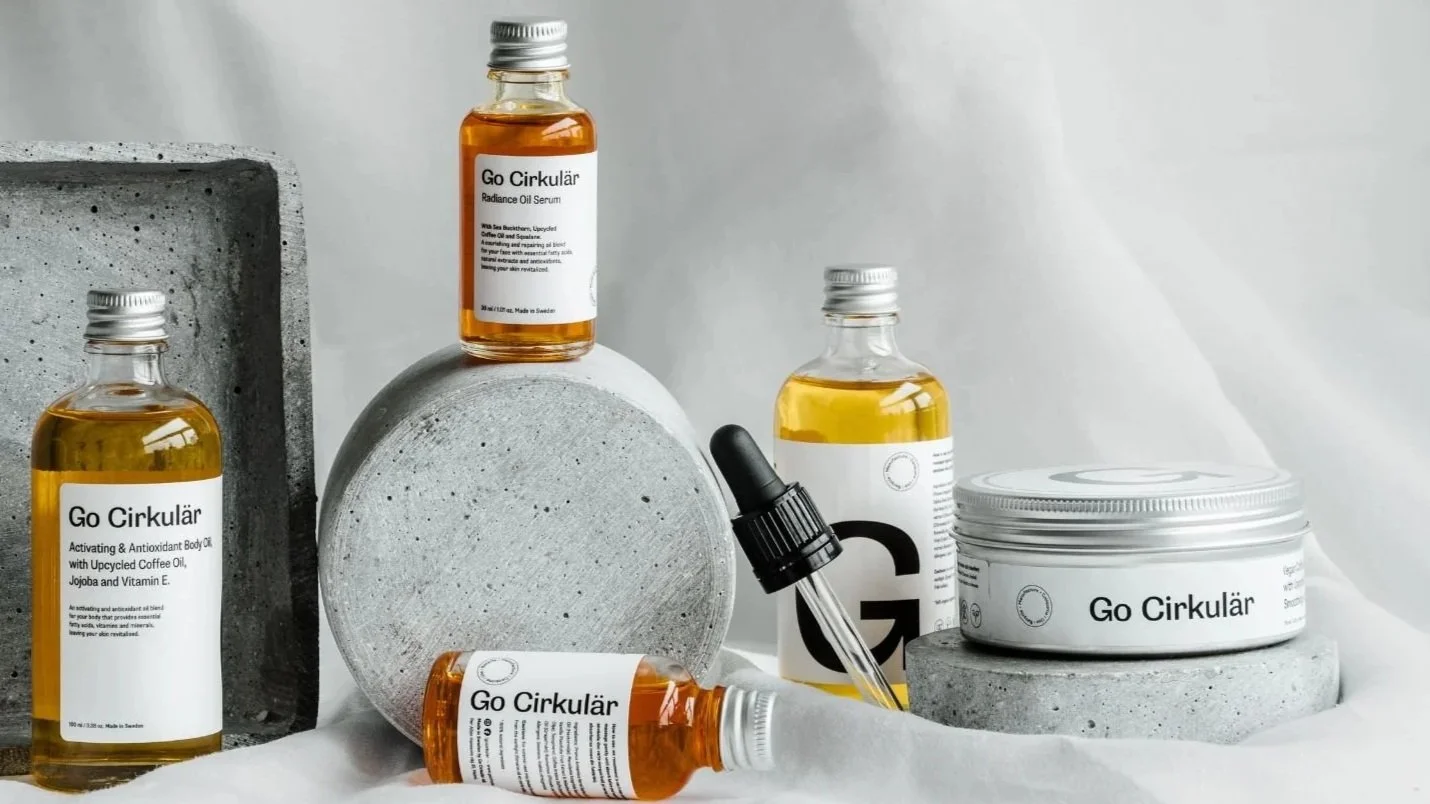
We have chosen to package all of our products in glass or aluminium, because of their high recyclability.
At Go Cirkulär, we refuse the use of plastic
Now you might be convinced to change your face wash, moisturiser, and serum to a more sustainably packaged option - great, we got you!
Did you know:
We have refillable stations to reuse your glass bottles? In Europe, on average, 74% of all glass is recycled, compared to 41% for plastic packaging (4); however, giving a second life to the packaging and limiting the new packaging dependence can be a great idea to alleviate pressure on energy consumption and resources.
Recycling aluminium uses about 95% less energy, but reusing also goes a long way. Our aluminium tins can be the perfect storage boxes for your solid soap and shampoo, for example.
Pipettes in our bottles are not included. Pipettes are made of silicone, plastic and glass, which are difficult to recycle. This is against our policy, but if you need it, you can purchase it separately and make the conscious choice to reuse it again and again for your next bottles.
When you order online, nothing in our mailing box contains plastic. It is definitely challenging for a small company like us to choose more expensive sustainable kraft and recycled printing materials; however, we wouldn’t compromise on this for anything. After unboxing, there is always so much waste!
We Are In This Together
In 2024, the Plastic Free July campaign helped to reduce plastic consumption by 390 million kgs (3). Plastic Free July is not about perfection. It’s about paying attention to small habits that are easily overlooked and making more mindful choices where we can. Are you with us?
Sources
Plastic Free July Foundation. (n.d.). The plastic pollution issues.
SDG Action Awards. (n.d.). Plastic Free July.
BBC. (2023, April 27). Glass or plastic: Which is better for the environment?
European Aluminium. (n.d.). Recycling.
National Center for Biotechnology Information. (2022). Plastic pollution: Challenges and opportunities (PMCID: PMC9657586).